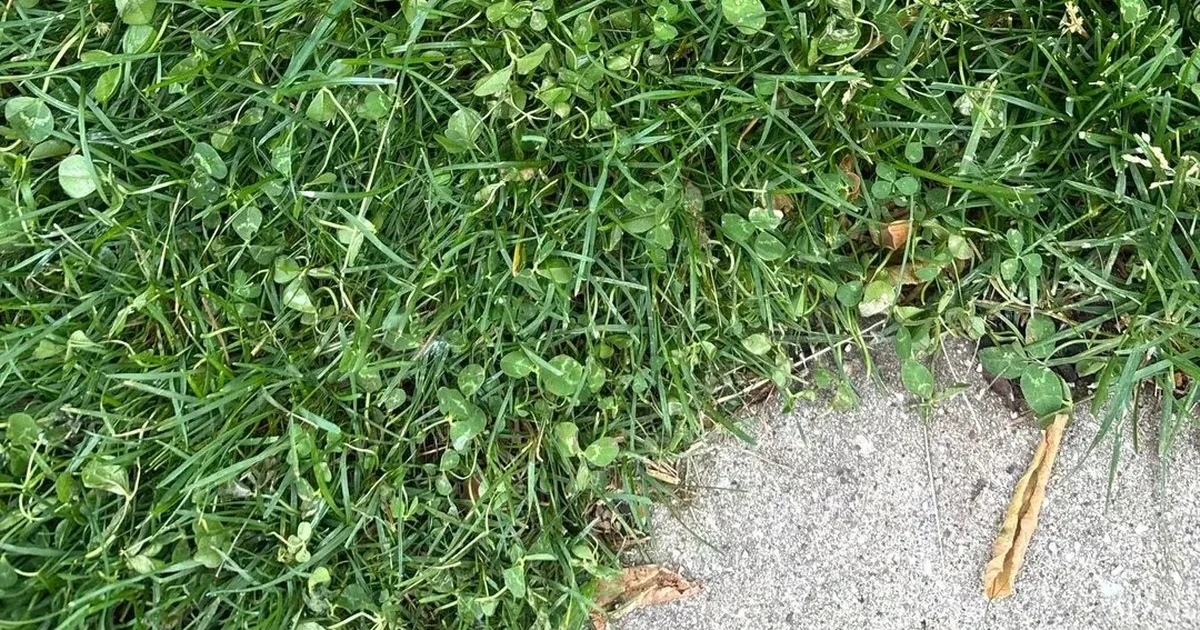
Somebody plants clover. Not by accident, on purpose, because clover feeds the bees, fixes the soil, and asks for none of the poison a perfect green carpet runs on. It's a small, good thing. Then the association rolls through with a sprayer and kills all of it. If that lands like a punch in the chest, it should. You did something right and got punished for it. And your first thought is the correct one: wait, isn't there a law? In Illinois there is. Here's the hard part. It might not be the law for clover. Whether your association can touch what you plant comes down to two questions almost nobody checks first. Whose ground is it, and what did you put in it. Get those right and you stop being a victim of the rulebook and start holding it.
Whose Ground Is It?
Before you quote a single statute, find out whose soil it is. In a condo, the strip around your unit is usually a common element, which means the association controls it, not you. The Illinois Condominium Property Act (765 ILCS 605) hands them that. If the dirt you planted in isn't yours, your rights start a lot further down the page, and that's a rough thing to find out after the fact. What a board can dictate over your ground starts with the Illinois HOA laws that hand it that power.
HOA lots are different. You usually own the ground your house sits on, subject to the declaration and the rules, and that ownership is the thing that makes everything below work. So ask the question first. A lot of these fights end right here, quietly, at "that was never your land."
The Law That Actually Has Your Back
In July 2024 Illinois passed the Homeowner's Native Landscaping Act (765 ILCS 167), and almost nobody knows it's on the books. It says an Illinois HOA or condo association can't stop you from growing Illinois native species on land you control. A rule that flatly bans natives doesn't beat the statute. It loses to it. For a lot of homeowners that's the first time the law has ever been the side holding the leverage.
What counts as native is spelled out at 765 ILCS 167/5. If you're planting with this protection in mind, check your picks against the state's native list first. The whole shield rides on that one word.
Where the Law Stops, and Where the Clover Falls
Here's the part that stings. The Act covers Illinois native species, full stop. Clover isn't native. Neither is ordinary turf, or most of the pretty stuff bred in a greenhouse three states away. So the lawn that got sprayed may not have been protected, even though killing it felt exactly as wrong as if it were. That isn't your gut being off. It's the law being narrower than it ought to be.
It also isn't a free pass. Associations can still ask for reasonable upkeep. A native planting has to stay clear of weeds, invasive species, and trash, can't spill onto a neighbor or the common area, and can't block a sight line or a utility. Native means protected. It doesn't mean unattended.
A Fine Still Has to Follow the Rules
If they fined you on top of it, that fine has its own rules. For condos, 765 ILCS 605/18.4(l) says notice and a real chance to be heard come before the money. For HOAs, 765 ILCS 160/1-30(g) sets the same floor. A bill with no notice and no hearing behind it may not stand the way they sent it.
Two more things to nail down. The rule they're citing has to actually be in your governing documents. And it has to land on everyone the same way.
So What's the Actual Move?
Here's what the clover story is really pointing at. If you want to win this instead of arguing it forever, plant the thing the law already protects. Go native, on ground you control, and you're not asking permission anymore. You're standing on a statute. The bees get their flowers, the soil gets a break from the chemical drip, and the board loses the one thing it had going for it, which was your uncertainty. That's the quiet kind of win, and it's completely legal.
Before you plant a thing, get two answers from the association in writing: the exact rule they're citing, and whether the patch is even yours or a common element. Those two answers decide everything that comes after.
How to Get Those Answers in Writing
How to
Get the cited rule and the property classification in writing
Send this to your association or its management company, by a method you can track, and keep a copy. Pinning down the rule and who owns the ground forces them to commit to a position and gives you something solid to push against.
[Date]

[Association Name]
[Management Company Name, if applicable]
[Mailing Address]

Re: Records Request - Landscaping Citation at [Your Address]

To Whom It May Concern:

I am requesting the following records related to the citation issued to me on [Date of Citation]:

1. The specific rule or provision in the governing documents I am alleged to have violated, including the document name and section number.

2. The official classification of the area at issue, specifically whether it is designated a common element or whether it falls within my individually owned lot under the declaration and plat.

3. A copy of the written notice and any hearing documentation associated with this citation.

Please provide these records within the time period required by Illinois law. I am making this request as a member of the association.

[Your Name]
[Your Address]
[Your Phone / Email]
An association that can't produce the written rule, or won't say whether the ground is even yours, is standing on a lot less than it wants you to believe. For condos, the board generally has 10 business days to respond, and missing that counts as a denial.
That letter is step one.
You can send the above letter, or we can handle the whole case ourselves, from start to finish.
Get my free assessmentNo payment now. The $349 only starts your case if you act.
Where We Come In
Most people meet a yard fight in one of two losing postures. They rip it out and swallow the fine, or they call a lawyer they can't justify paying over a flower bed. There's a step in between, and that's us. We figure out which of the three situations you're actually in: a protected native planting, a common element you don't control, or a clean violation you'll want to handle a different way. We read it against Illinois law, find the gaps the board's counting on you to miss, build the documented record, and get you ready for small claims if it goes there. If it ever escalates, you hand an attorney a clean file instead of a panic. You walk in knowing exactly where you stand.
FAQ
Does the Illinois Native Landscaping Act apply to condo associations?
Yes. The Homeowner's Native Landscaping Act (765 ILCS 167) covers both HOAs under CICAA (765 ILCS 160) and condo associations under the Condominium Property Act (765 ILCS 605). The catch for condo owners is the threshold question: the Act only protects planting on land you control, and condo exterior areas are usually common elements.
What counts as an Illinois native plant under the 2024 law?
The definitions live at 765 ILCS 167/5. The plant has to be a species native to Illinois. Ordinary lawn grass, clover, and cultivated garden varieties generally aren't on that list. If you're planting a native garden specifically to lean on this protection, check each species against the state's native plant definitions first.
Can my HOA still make me maintain my native plant area?
Yes. The Act lets associations enforce reasonable upkeep. Your native area has to stay free of weeds and invasive species, can't spill onto neighbors or common areas, and can't block sight lines or interfere with utilities. The law stops them from banning native plants outright. It doesn't hand you a pass on maintenance.
What are my rights if the HOA fines me without a hearing?
Both HOA fines (765 ILCS 160/1-30(g)) and condo fines (765 ILCS 605/18.4(l)) require notice and a chance to be heard before the fine is valid. If they sent a bill without that process, the fine may not be properly issued. Request the notice documentation in writing and hold it up against what the statute requires.
What is selective enforcement, and does it help my case?
It means the association applied a rule to you but not to others in the same boat. It's a recognized argument in Illinois HOA and condo disputes. It won't automatically erase a fine, but it matters, especially when you can show the same condition sitting unbothered elsewhere in the community. Document it with photos and dates.
How do I request the HOA rule they cited for my landscaping violation?
Send this to your association or its management company, by a method you can track, and keep a copy. Pinning down the rule and who owns the ground forces them to commit to a position and gives you something solid to push against.